
Digital Marketing Roadmap: How to Scale from Setup to Success

- What Is a Digital Marketing Roadmap?
- Why Is Digital Marketing Important Today?
- What Are the Types of Digital Marketing?
- What Are the Main Pillars and Elements of Digital Marketing?
- What Do Digital Marketers Do?
- How to Follow a Digital Marketing Roadmap Step by Step
- How Can Small Businesses Use Digital Marketing?
- How to Get Clients and Generate Digital Marketing Sales
- How to Measure Digital Marketing Performance
- What Is the Future of Digital Marketing?
- Common Digital Marketing Roadmap Mistakes to Avoid
- Your Digital Marketing Roadmap: A 30/60/90-Day Action Plan
- Conclusion: Your Next Steps
What Is a Digital Marketing Roadmap?
A digital marketing roadmap is a structured plan that outlines the goals, strategies, channels, activities, timelines, and performance measures needed to achieve marketing objectives online. It helps beginners, marketers, entrepreneurs, and businesses understand what to do first, which skills or resources they need, and how to measure progress across SEO, content marketing, PPC (pay-per-click advertising), and social media.
In today's competitive digital environment, simply having a website or posting regularly on social media is not enough. Businesses need a clear direction to reach the right audience, communicate their value, generate leads, and convert potential customers into paying customers. Individuals entering the field also need a structured learning path to avoid jumping between tools and techniques without developing practical skills.
A digital marketing roadmap connects these activities into a coordinated process. It begins with understanding the target audience and defining measurable goals. From there, marketers select suitable channels, plan content and campaigns, allocate resources, monitor performance, and improve their approach using data.
For example, a small business in India that wants to increase online enquiries might focus on local SEO, a well-designed website, useful content, and targeted social media campaigns. An aspiring digital marketer, on the other hand, might begin with marketing fundamentals, learn SEO and content creation, practise analytics, and build a portfolio through practical projects.
Why Is Digital Marketing Important Today?
Digital marketing is important because it helps businesses reach relevant audiences online, build brand awareness, generate leads, and measure marketing performance. As customers use search engines, social media, websites, and online reviews to research products and services, businesses need a clear digital presence to remain discoverable and competitive.
Unlike traditional marketing, many digital channels allow businesses to target specific audiences and track interactions. This helps marketers understand what attracts potential customers and where improvements are needed. However, results depend on the strategy, budget, competition, and quality of execution.
Key Benefits of Digital Marketing
-
Greater brand awareness: Helps businesses introduce their products or services to relevant audiences through search, social media, and content.
-
Targeted audience reach: Enables marketers to focus on people based on factors such as interests, location, and search behavior.
-
Lead generation: Helps attract potential customers through landing pages, enquiry forms, email campaigns, and relevant content.
-
Measurable performance: Analytics tools help businesses assess website traffic, enquiries, conversions, and campaign costs.
-
Cost flexibility: Businesses can begin with selected channels and adjust spending according to their resources and results.
-
Improved customer engagement: Social media, email, and messaging channels support communication throughout the customer journey.
-
Better decision-making: Performance data helps marketers identify effective activities and improve underperforming campaigns.
Why It Matters for Small Businesses
For small businesses, digital marketing can provide practical ways to compete for attention without relying entirely on expensive traditional advertising. For example, a local service provider in India could improve its Google Business Profile, publish useful website content, and encourage genuine customer reviews to strengthen local visibility.
The need for digital marketing is not simply about being present on every platform. It is about choosing the right channels, understanding customer needs, and connecting marketing activities to meaningful outcomes, such as qualified enquiries, sales, or repeat purchases.
What Are the Types of Digital Marketing?
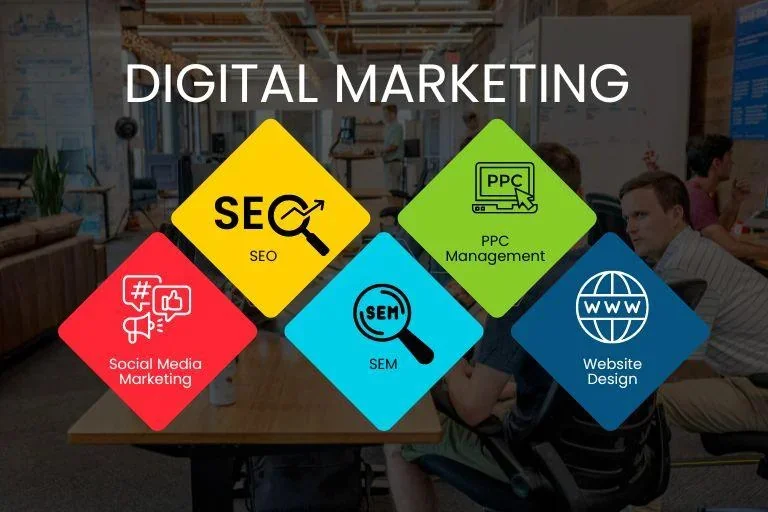
The main types of digital marketing include search engine optimization (SEO), pay-per-click advertising (PPC), social media marketing, content marketing, email marketing, influencer marketing, affiliate marketing, video marketing, and mobile and messaging marketing. Each serves a different purpose, and businesses often combine several channels to reach customers at different stages of their buying journey.
There is no universally fixed number of digital marketing types because some categories overlap. For example, video marketing can be part of content marketing, while paid social media campaigns also fall under PPC advertising.
Types of Digital Marketing and Their Uses
|
Type |
Primary purpose |
Common use case |
Key measurement |
|
SEO |
Improve organic search visibility |
Attract people searching for relevant products or services |
Organic clicks, impressions, conversions |
|
PPC advertising |
Reach audiences through paid ads |
Generate leads or sales through search and display ads |
Cost per click, conversions, return on ad spend |
|
Social media marketing |
Build awareness and engagement |
Promote products on Instagram, Facebook, or LinkedIn |
Engagement, reach, leads |
|
Content marketing |
Educate and attract audiences |
Publish blogs, guides and useful resources |
Engagement, organic traffic, assisted conversions |
|
Email marketing |
Nurture leads and retain customers |
Send newsletters, offers and follow-ups |
Clicks, conversions, unsubscribes |
|
Influencer marketing |
Reach audiences through creators |
Introduce a product to an established community |
Referral traffic, sales, engagement |
|
Affiliate marketing |
Encourage partner-driven referrals |
Reward partners for qualifying sales or actions |
Conversions, commission costs |
|
Video marketing |
Explain products and engage viewers |
Publish demonstrations, tutorials, and testimonials |
Watch time, engagement, conversions |
|
Mobile and messaging marketing |
Communicate through mobile channels |
Send permitted SMS or WhatsApp updates |
Clicks, responses, conversions, opt-outs |
1. Search Engine Optimization (SEO)
SEO improves a website's visibility in unpaid search results. It involves understanding search intent, creating useful content, improving website structure, and addressing technical issues that affect crawling and indexing.
Example: A dental clinic publishes a helpful page about its treatments and improves its local business information to reach people searching for nearby dental services.
SEO is generally a long-term activity; visibility and results are not guaranteed.
2. Pay-Per-Click Advertising (PPC)
PPC allows advertisers to pay for clicks or other defined advertising outcomes, depending on the platform and campaign model. Search ads, display ads, and paid social campaigns can help businesses reach relevant audiences more quickly than waiting for organic visibility.
Example: An online store runs a targeted search campaign for a specific product category and tracks purchases against advertising costs.
PPC requires budget control, accurate conversion tracking, and continuous optimization.
3. Social Media Marketing
Social media marketing uses platforms such as Instagram, Facebook, LinkedIn, and YouTube to distribute content, engage communities, promote offerings, and support lead generation.
Example: A local restaurant posts menu videos, shares customer-approved testimonials, and directs interested viewers to its ordering channel.
Consistent content and relevant audience targeting matter more than simply publishing frequently.
4. Content Marketing
Content marketing attracts and supports potential customers through useful material, including blog posts, guides, case studies, infographics, and videos. It helps answer questions and build trust before a customer makes a decision.
Example: A financial software company publishes a guide explaining how small businesses can organize invoices and track expenses.
Content should address real audience needs rather than exist solely to insert keywords.
5. Email Marketing
Email marketing supports lead nurturing, customer education, retention, and repeat purchases. Businesses can send newsletters, product updates, onboarding messages, and relevant offers to subscribers who have appropriately agreed to receive them.
Example: An online retailer sends a product-care guide after purchase and later shares relevant recommendations.
Track meaningful engagement and conversions while respecting consent, privacy, and unsubscribe preferences.
6. Influencer and Affiliate Marketing
Influencer marketing collaborates with creators who have relevant audiences. Affiliate marketing uses tracked referrals and agreed commissions to reward partners for qualifying actions.
Both approaches can extend reach, but businesses should assess audience relevance, authenticity, costs, and actual conversions. Paid partnerships and endorsements should also follow applicable disclosure requirements.
7. Video Marketing
Video marketing uses short-form videos, tutorials, demonstrations, interviews, and longer educational content to explain ideas or products.
Example: A home-appliance brand publishes a short demonstration showing how to use and maintain a product.
Useful measures include watch time, completion rates, qualified visits, and conversions—not views alone.
8. Mobile and Messaging Marketing
Mobile marketing reaches audiences through mobile-friendly websites, apps, SMS, and messaging platforms such as WhatsApp. It can support reminders, customer service, order updates, and promotional communication where permitted.
Example: A service business sends an appointment reminder to a customer who has agreed to receive relevant messages.
Businesses should prioritize mobile usability, appropriate consent, message relevance, and easy opt-out options.
How Should You Choose the Right Digital Marketing Types?
Start with your business objective and audience rather than trying every channel simultaneously. SEO and content marketing may suit businesses building long-term organic visibility, while paid advertising can help test demand or generate targeted traffic. Email and messaging can support retention, and social media can help build awareness and engagement.
The best digital marketing mix depends on your goals, budget, audience behavior, resources, and ability to measure results. A roadmap helps you prioritize channels, test them systematically, and invest more confidently as evidence accumulates.
What Are the Main Pillars and Elements of Digital Marketing?
The main pillars of digital marketing are the core components that work together to attract the right audience, deliver relevant content, generate conversions, and measure results. A practical framework includes audience research, strategy, content, marketing channels, conversion, analytics, and optimization. The number of pillars varies across frameworks, but their purpose is to make marketing activities work toward shared business goals.
7 Core Pillars of Digital Marketing
-
Audience research: Identifies target customers, their needs, preferences, online behavior, and problems.
-
Strategy and planning: Defines marketing objectives, priorities, budgets, timelines, and success measures.
-
Content creation: Develops useful and relevant material that answers customer questions and communicates value.
-
Channel selection: Chooses suitable channels, such as SEO, PPC, social media, and email, to reach the intended audience.
-
Conversion optimization: Improves websites, landing pages, forms, and calls to action to help visitors complete desired actions.
-
Analytics and measurement: Tracks performance using metrics such as traffic, leads, conversion rates, and acquisition costs.
-
Continuous optimization: Uses performance data and customer feedback to refine campaigns and improve future decisions.
These pillars are interconnected. Audience research informs strategy, strategy guides content and channel selection, and analytics reveals whether those activities are producing useful results.
What Are the Key Elements and Features of Digital Marketing?
The elements of digital marketing describe the components used to plan and execute campaigns. Its common features include measurable performance, audience targeting, interactive communication, flexible budgets, and the ability to adjust campaigns based on results.
For example, an Indian clothing retailer might research its audience, publish product videos on Instagram, optimize product pages for search, run paid advertisements, and track purchases through analytics. If advertisements generate clicks but few sales, the retailer can investigate product-page usability, pricing, or checkout issues before spending more.
The key principle is that digital marketing is not a collection of independent channels. It is a connected system in which research, planning, execution, conversion, and measurement support one another. A strong digital marketing roadmap helps businesses coordinate these elements instead of investing in disconnected activities.
What Do Digital Marketers Do?
Digital marketers plan, execute, and evaluate online marketing activities to help businesses reach target audiences, attract potential customers, generate leads, and increase sales. Their responsibilities may include SEO, content creation, paid advertising, social media management, email campaigns, and performance analysis. In smaller businesses, one marketer may handle several activities, while larger organizations often employ specialists for individual channels.
Digital Marketing Roles and Responsibilities
|
Job role |
Main responsibilities |
Core skills |
Relevant KPIs |
|
Digital Marketing Specialist |
Coordinates campaigns across digital channels |
Strategy, campaign management, communication |
Leads, conversions, campaign ROI |
|
Digital Marketing SEO Specialist |
Improves organic search visibility and website performance |
Keyword research, technical SEO, content optimization |
Organic clicks, rankings, conversions |
|
Content Strategist |
Plans content based on audience needs and business goals |
Research, writing, editorial planning |
Organic traffic, engagement, assisted conversions |
|
PPC Specialist |
Manages paid search and advertising campaigns |
Ad platforms, targeting, budget optimization |
Cost per click, cost per lead, ROAS |
|
Social Media Manager |
Plans posts, manages communities, and supports social campaigns |
Content planning, communication, platform analytics |
Reach, engagement, qualified leads |
|
Email Marketing Specialist |
Creates email campaigns and customer journeys |
Copywriting, segmentation, automation |
Click-through rate, conversions, unsubscribes |
|
Marketing Analyst |
Interprets marketing data and identifies opportunities |
Analytics, reporting, data interpretation |
Conversion rate, acquisition cost, revenue contribution |
KPIs (key performance indicators) are measurements used to assess progress toward specific goals. The most appropriate KPIs depend on each role's responsibilities and the business objective.
What Does a Digital Marketing SEO Specialist Do?
A digital marketing SEO specialist focuses on helping websites appear in relevant organic search results. Typical tasks include researching keywords, improving page content, identifying technical issues, strengthening internal links, and analyzing performance through tools such as Google Search Console and Google Analytics.
For example, an SEO specialist working with an Indian eCommerce business might identify product-related search queries, improve product-page descriptions, and monitor organic clicks and purchases. Success involves attracting relevant visitors and supporting business outcomes, not simply improving rankings.
Which Digital Marketing Skills Should Beginners Learn?
Beginners should start with marketing fundamentals, audience research, basic SEO, content writing, social media, and analytics. They can then explore a specialization such as PPC, email marketing, or marketing analysis based on their interests.
Practical projects are essential. Creating a sample content plan, auditing a website, or measuring a small campaign helps demonstrate skills to potential employers and clients. A digital marketing roadmap makes this learning process more manageable by organizing skills in a logical sequence.
How to Follow a Digital Marketing Roadmap Step by Step
A digital marketing roadmap for beginners should move from understanding marketing fundamentals to planning, execution, measurement, and optimization. Following these steps in sequence helps individuals develop practical skills and enables businesses to organize campaigns around clear objectives rather than disconnected activities.
Step 1 — Learn the Fundamentals and Customer Journey
Objective: Understand how digital marketing attracts and converts potential customers.
Learn the basics of SEO, content marketing, social media, PPC advertising, email marketing, and analytics. Also understand the customer journey: awareness, consideration, conversion, and retention.
Activity: Study how a customer discovers a business, compares alternatives, makes a purchase, and decides whether to return.
Deliverable: A simple customer journey map showing key questions, touchpoints, and potential barriers.
Completion criteria: You can explain the purpose of major digital channels and how they support different stages of the customer journey.
Step 2 — Choose a Goal and Define the Target Audience
Objective: Give your digital marketing activities a clear direction.
Set a SMART goal: one that is specific, measurable, achievable, relevant, and time-bound. Research your target audience, including their needs, location, preferences, challenges, and online behavior.
Activity: Instead of setting a vague goal such as “increase online visibility,” define a measurable objective, such as generating 30 qualified enquiries within 90 days.
Deliverable: A written goal, target audience profile, and baseline measurement.
Completion criteria: You know whom you want to reach, what outcome you want, and how you will measure progress.
Step 3 — Build a Website or Suitable Landing Page and Tracking Setup
Objective: Create a destination where marketing activity can lead to meaningful action.
Build or improve a mobile-friendly website or landing page with clear information, relevant content, and a visible call to action. Set up suitable analytics and conversion tracking before launching campaigns.
Activity: Test enquiry forms, contact links, page speed, navigation, and tracking for important actions.
Deliverable: A functioning landing page or website with tested measurement tools.
Completion criteria: Visitors can complete the intended action, and important interactions are recorded accurately.
Step 4 — Learn SEO, Content, Social Media and Paid Advertising Basics
Objective: Understand the channels available and when to use them.
Learn how SEO supports organic discovery, content marketing answers customer questions, social media builds awareness and engagement, and paid advertising reaches selected audiences. Explore email marketing and analytics as supporting capabilities.
Activity: Choose one primary channel based on your goal, audience, budget, and available skills. Learn the basics of other channels so you can coordinate them when appropriate.
Deliverable: A channel-selection document explaining why each chosen channel fits the objective.
Completion criteria: You can explain the role, cost considerations, limitations, and performance measures of each selected channel.
Step 5 — Practise Through a Real or Sample Project
Objective: Turn theoretical knowledge into demonstrable skills.
Create a sample SEO audit, content calendar, social media campaign, landing page, or paid advertising plan. If possible, work on a real project with permission to access the relevant data.
Activity: Document the starting position, objectives, actions, and results. Clearly distinguish simulated outcomes from actual campaign performance.
Deliverable: A portfolio project showing your approach, reasoning, and work.
Completion criteria: Another person can understand what you did, why you did it, and how you would evaluate its effectiveness.
Step 6 — Launch a Small Campaign or Publish a Focused Content Plan
Objective: Apply your plan on a manageable scale.
Launch a limited campaign or publish a focused set of content pieces. Establish a realistic budget, schedule, target audience, and measurement process before execution.
Activity: For example, a local service business could publish useful service pages, improve its local search presence, and distribute relevant posts over a defined period.
Deliverable: A live campaign or published content plan with documented goals and tracking.
Completion criteria: The campaign is running as intended, measurement is working, and you have enough observations to identify potential improvements.
Step 7 — Measure Outcomes and Improve the Approach
Objective: Use evidence to guide the next round of activity.
Review relevant KPIs, such as qualified leads, conversion rates, organic clicks, cost per lead, or sales. Compare performance with the original objective and investigate unexpected results before changing the strategy.
Activity: Identify what worked, what did not, and what should be tested next. Change one or a small number of variables when practical so you can better understand their effects.
Deliverable: A performance report with findings and prioritized next actions.
Completion criteria: You can explain the results, identify likely causes, and recommend a specific next step.
How to Build a Digital Marketing Strategy and Plan
A digital marketing strategy defines how marketing activities will achieve business objectives. A digital marketing plan translates that strategy into specific actions, responsibilities, budgets, timelines, and KPIs. The roadmap provides the broader sequence, while the strategy and plan explain what to prioritize and how to execute it.
A Practical Digital Marketing Planning Framework
1. Define the business objective. Decide whether the priority is brand awareness, qualified leads, online sales, repeat purchases, or another measurable outcome.
2. Research the audience and competitors. Identify customer needs, purchasing barriers, relevant search behavior, and competitor positioning. Use these findings to identify opportunities rather than simply copying competitors.
3. Establish SMART goals and KPIs. Set measurable targets and define how progress will be evaluated. For example, a lead-generation campaign might track qualified enquiries, conversion rate, and cost per qualified lead.
4. Select the channel mix. Choose suitable channels based on audience behavior, budget, resources, and objectives. Avoid spreading resources across every platform without a clear reason.
5. Create a content calendar. Plan topics, formats, publishing dates, calls to action, and responsible team members. Align content with the questions customers ask at different stages of their journey.
6. Allocate the budget and responsibilities. Account for advertising, content production, tools, staff time, and other relevant costs. Establish who will execute, review, and approve each activity.
7. Implement tracking and reporting. Check that analytics, campaign tagging, lead tracking, and conversion measurement work before evaluating results.
8. Review and optimize. Compare performance against targets, investigate problems, and prioritize improvements based on evidence.
How Can Small Businesses Use Digital Marketing?
Small businesses can use digital marketing to improve online visibility, attract relevant customers, generate enquiries, and increase sales without relying entirely on traditional advertising. The most effective approach is to choose channels that match the business model, target audience, budget, and customer journey, then measure whether those channels contribute to meaningful business outcomes.
Best Digital Marketing Channels for Small Businesses
|
Business type |
Recommended channels |
Primary objective |
Key metrics |
|
Local service business |
Local SEO, Google Business Profile, social media, WhatsApp Business |
Generate local enquiries and bookings |
Calls, qualified enquiries, bookings |
|
D2C or eCommerce brand |
SEO, product content, social media, email, paid advertising |
Increase product discovery and online sales |
Conversion rate, sales, acquisition cost |
|
B2B service provider |
SEO, LinkedIn, educational content, email outreach |
Generate qualified business leads |
Qualified leads, meetings, lead-to-client conversion |
1. Local Service Businesses
Plumbers, clinics, salons, restaurants, and home-service providers can focus on local search visibility and convenient customer communication.
Recommended approach:
-
Create and maintain an accurate Google Business Profile, where eligible.
-
Publish useful website pages describing services, locations served, and pricing information where appropriate.
-
Encourage genuine customer reviews without offering prohibited incentives.
-
Use social media to demonstrate services, answer common questions, and share updates.
-
Use WhatsApp Business or other suitable channels for enquiries and bookings, with appropriate consent for promotional messages.
Example: A salon in Pune could improve its local listing, publish service and pricing information, and share relevant work on Instagram. It could then track calls, appointment enquiries, and completed bookings to identify which activities contribute to business results.
2. D2C and eCommerce Businesses
Direct-to-consumer (D2C) and eCommerce brands need to help shoppers discover products, evaluate their benefits, and complete purchases.
Recommended approach:
-
Optimize product pages with accurate descriptions, useful images, and clear delivery and return information.
-
Use SEO and educational content to address product-related search queries.
-
Publish product demonstrations and relevant social media content.
-
Test paid advertising with a controlled budget and reliable conversion tracking.
-
Use email marketing to support customer retention and repeat purchases.
Example: An Indian dry-fruit gift brand could publish seasonal gifting guides, showcase product packaging through short videos, and improve product pages for relevant searches. Tracking purchases, average order value, and acquisition costs would help evaluate performance.
3. B2B Service Providers
Businesses offering software, consulting, manufacturing, or professional services often need to build credibility and reach decision-makers with specific requirements.
Recommended approach:
-
Publish detailed service pages and useful industry guides.
-
Use LinkedIn to share expertise and build professional relationships.
-
Develop case studies based on verified client results and with appropriate permission.
-
Use targeted outreach that is relevant, professional, and compliant with applicable rules.
-
Track qualified leads, discovery meetings, proposals, and conversions through a customer relationship management (CRM) system or suitable tracking process.
Example: A small IT consultancy could publish a guide explaining a common business technology problem, share it with a relevant professional audience, and track enquiries that result in qualified sales conversations.
How to Start a Digital Marketing Business or Company
Starting a digital marketing business involves choosing a target market, developing marketable skills, defining services, building a portfolio, setting prices, and acquiring clients. In India, beginners can start as freelancers or establish an agency as their workload and resources grow. The right approach depends on experience, available capital, business goals, and the ability to deliver consistent results.
Step-by-Step Process to Start a Digital Marketing Business
Step 1: Choose a niche and target audience
Decide which customers you want to serve, such as local businesses, eCommerce brands, healthcare providers, or B2B companies. A clear niche helps you understand customer problems and develop relevant services.
Step 2: Select your services
Start with services you can deliver competently. Options include SEO, content marketing, social media management, PPC advertising, email marketing, and website optimization. Avoid promising every service before developing the necessary skills.
Step 3: Build a portfolio
Create sample projects, conduct website audits, or work with initial clients to demonstrate your approach. Clearly label hypothetical projects and obtain permission before publishing client information or results.
Step 4: Create service packages and pricing
Define what each package includes, the expected deliverables, timelines, reporting arrangements, and exclusions. Pricing may be project-based, hourly, or monthly. Estimate the time, tools, advertising support, and other costs required to deliver the work profitably.
Step 5: Establish your business operations
Set up a professional website or portfolio, business email, contracts, invoicing, payment processes, and record-keeping. Review applicable Indian business registration, taxation, privacy, and contractual requirements with qualified professionals where necessary.
Step 6: Find and approach potential clients
Use referrals, professional networking, relevant communities, personalized outreach, and educational content to connect with potential customers. Focus on understanding their problems and explaining how your service may help rather than guaranteeing results.
Step 7: Deliver, report, and retain clients
Agree on objectives and KPIs before beginning work. Provide regular updates, document deliverables, discuss results honestly, and recommend improvements based on evidence. Reliable communication and consistent delivery can support long-term client relationships.
Freelancing vs. Starting a Digital Marketing Agency
|
Factor |
Freelancing |
Agency |
|
Business model |
Individual delivers services |
Team or coordinated specialists deliver services |
|
Initial costs |
Often lower |
Usually higher as staffing and operations expand |
|
Client capacity |
Limited by individual time and skills |
Can expand through systems and team capacity |
|
Management |
Primarily client work and administration |
Includes team management, quality control, and operations |
|
Best suited for |
Beginners and independent specialists |
Experienced professionals with validated demand and repeatable processes |
Which should you choose? Freelancing is often a practical starting point for someone developing skills and validating demand. An agency may make sense when client demand exceeds individual capacity, and the business has reliable processes, sufficient cash flow, and a clear reason to build a team.
How to Get Clients and Generate Digital Marketing Sales
To get clients for digital marketing services, identify a specific target audience, demonstrate your expertise, reach relevant prospects, understand their business problems, and present a clear service proposal. A repeatable sales process helps freelancers and agencies turn potential customers into qualified leads and long-term clients without relying entirely on referrals or cold outreach.
Step-by-Step Process to Find and Convert Clients
Step 1: Define your ideal client
Choose the industries, business sizes, and customer problems that match your skills. For example, an SEO freelancer might focus on local service businesses that need better organic search visibility.
Step 2: Build credibility before outreach
Create a professional portfolio with sample projects, website audits, campaign plans, or verified results from previous work. Explain your process and the problems you can help solve rather than making unsupported performance promises.
Step 3: Find relevant prospects
Use professional networks, referrals, business directories, LinkedIn, industry communities, and relevant local events to identify businesses that may benefit from your services. Research each prospect before contacting them.
Step 4: Start a personalized conversation
Explain why you are reaching out and identify a relevant opportunity. Avoid generic messages that could be sent to any business.
Personalize the message with a genuine observation, follow applicable outreach rules, and respect requests not to be contacted again.
Step 5: Qualify the lead
A discovery call helps establish whether a prospect is a suitable client. Ask about their goals, current marketing activities, target audience, budget range, decision-making process, and timeline.
A qualified lead has a relevant need, a realistic path to purchasing the service, and expectations that you can reasonably address.
Step 6: Present a clear proposal
Summarize the client's problem, proposed approach, deliverables, timeline, fees, reporting, and responsibilities. Explain what is included and excluded, and define how success will be evaluated.
For example, an SEO proposal could include a technical audit, prioritized recommendations, content optimization, and monthly performance reporting.
Step 7: Follow up and agree on next steps
Send a concise follow-up after the discussion, answer outstanding questions, and clarify the decision timeline. If the prospect is interested, agree on the contract, payment terms, onboarding requirements, and start date.
Step 8: Deliver results and encourage retention
Provide the agreed work, communicate progress, and report on relevant KPIs. Use client feedback and performance data to identify opportunities for continued work, referrals, or additional services when appropriate.
How to Measure Digital Marketing Performance
Digital marketing performance is measured by comparing campaign results with defined business objectives using key performance indicators (KPIs). Metrics such as organic traffic, qualified leads, conversion rate, customer acquisition cost, and return on ad spend help marketers understand which activities contribute to meaningful outcomes and where improvements are needed.
Key Digital Marketing KPIs and What They Measure
|
Business objective |
KPI |
What it tells you |
Useful tool or data source |
|
Improve organic visibility |
Organic clicks and impressions |
Whether pages appear in and attract clicks from search results |
Google Search Console |
|
Increase website engagement |
Engaged sessions and relevant events |
How visitors interact with the website |
Google Analytics |
|
Generate leads |
Qualified leads |
How many enquiries meet your business criteria |
CRM or lead tracking system |
|
Improve conversions |
Conversion rate |
The proportion of relevant visits or users completing a desired action |
Google Analytics or CRM |
|
Control acquisition costs |
Customer acquisition cost (CAC) |
The cost of acquiring a customer under your defined calculation |
Marketing spend and sales data |
|
Improve advertising efficiency |
Return on ad spend (ROAS) |
Revenue attributed to advertising relative to advertising spend |
Advertising platform and revenue data |
|
Increase customer retention |
Repeat purchase rate |
How frequently customers purchase again over a defined period |
CRM or eCommerce analytics |
How to Measure Digital Marketing Results
1. Define the objective first. Decide whether the campaign aims to increase awareness, attract qualified leads, generate sales, or improve retention. Each objective requires different KPIs.
2. Establish a baseline. Record current performance before making significant changes. Historical data helps you understand whether results have improved, declined, or remained stable.
3. Configure reliable tracking. Use Google Analytics to measure website interactions and Google Search Console to assess search performance. Where relevant, connect lead and sales data to a CRM or eCommerce system.
4. Review results against targets. Compare actual performance with the original goal, budget, and timeline. Investigate unusual changes rather than assuming that every fluctuation reflects a campaign improvement.
5. Identify the next action. Improve underperforming landing pages, refine audience targeting, update content, or adjust advertising budgets based on the evidence available.
What Is the Future of Digital Marketing?
The future of digital marketing will be shaped by AI-assisted workflows, automation, changing search experiences, video, personalization, and growing attention to privacy and data governance. These developments create new opportunities, but their usefulness depends on customer needs, platform capabilities, industry requirements, and the quality of implementation.
Key Digital Marketing Trends to Understand
|
Trend |
Current direction |
Practical implication |
|
AI-assisted marketing |
Tools can help with research, drafting, analysis, and content variations |
Use AI to support workflows, with human review for accuracy, originality, and relevance |
|
Marketing automation |
Platforms can automate suitable email sequences, lead routing, and routine tasks |
Reduce repetitive work while preserving useful human interaction |
|
Changing search experiences |
Search increasingly includes richer results and AI-generated experiences in some contexts |
Publish clear, helpful content and maintain sound technical SEO; do not rely on one search feature |
|
First-party data |
Businesses increasingly need reliable, appropriately collected information from their own customer interactions |
Build useful consent-based customer relationships and maintain accurate records |
|
Privacy and data governance |
Data collection and marketing practices face legal, platform, and customer-trust constraints |
Review consent, access, retention, and applicable privacy requirements |
|
Video and visual content |
Short-form video, demonstrations, and visual explanations remain useful formats across many platforms |
Choose formats based on audience preferences and measure meaningful outcomes |
|
Personalization |
Marketers can tailor content and communication to relevant customer needs |
Use accurate data responsibly and avoid intrusive or misleading targeting |
How Should Digital Marketers Prepare?
Develop strong fundamentals. Audience research, writing, strategy, SEO, analytics, and critical thinking remain valuable even as tools change.
Learn to use AI responsibly. AI can accelerate research and routine tasks, but generated information requires verification. Publishing inaccurate or repetitive material can undermine trust and content quality.
Build measurement skills. Understand conversion tracking, campaign attribution, and how to distinguish correlation from evidence of impact. Not every improvement can be attributed confidently to a single marketing activity.
Respect privacy and consent. Use customer information responsibly and review the legal and platform requirements relevant to each campaign, especially for email and messaging.
Adapt through experimentation. Test emerging tools and formats on a manageable scale. Compare results against a defined objective before investing heavily.
The future of digital marketing is not about adopting every new technology. It is about combining useful tools with sound marketing judgment, reliable measurement, customer trust, and continuous learning. A flexible roadmap helps marketers adapt without abandoning the fundamentals that support sustainable results.
Common Digital Marketing Roadmap Mistakes to Avoid
A digital marketing roadmap can fail when businesses choose unsuitable channels, set unclear goals, allocate budgets poorly, or neglect performance measurement. Avoiding these mistakes helps marketers use their time and resources more effectively and make decisions based on evidence rather than assumptions.
Common Mistakes and How to Correct Them
|
Mistake |
Recommended correction |
|
Setting vague marketing goals |
Define SMART goals with measurable outcomes and realistic deadlines. |
|
Trying every channel at once |
Prioritize channels that match your audience, objectives, budget, and capabilities. |
|
Ignoring audience research |
Understand customer needs, search behavior, preferences, and purchasing barriers before planning campaigns. |
|
Expecting immediate SEO results |
Treat SEO as an ongoing process and monitor organic performance over time. |
|
Publishing content inconsistently |
Create a manageable content calendar aligned with customer questions and business priorities. |
|
Allocating the budget without a plan |
Set spending limits, account for production and operating costs, and review performance before reallocating funds. |
|
Focusing on vanity metrics |
Look beyond likes, impressions, and follower counts to qualified leads, conversions, retention, and revenue where relevant. |
|
Neglecting conversion tracking |
Test analytics, forms, calls to action, and other important conversion events before launching campaigns. |
|
Copying competitors without research |
Identify your own audience's needs and develop a strategy that fits your offering and resources. |
|
Making unsupported performance promises |
Set realistic expectations, communicate limitations, and report results honestly. |
|
Ignoring mobile usability |
Test website navigation, page speed, forms, and checkout experiences on mobile devices. |
|
Failing to review results |
Schedule regular performance reviews and prioritize improvements supported by evidence. |
How to Keep Your Digital Marketing Process on Track
Before launching a campaign, confirm that you have a clear objective, a defined audience, a suitable channel, an allocated budget, and working measurement tools. During execution, monitor relevant KPIs and investigate problems instead of changing several elements without a clear reason.
After each campaign cycle, document what worked, what did not, and what should happen next. This creates a continuous improvement process and helps prevent the same mistakes from recurring.
Your Digital Marketing Roadmap: A 30/60/90-Day Action Plan
A 30/60/90-day digital marketing roadmap turns broad goals into manageable milestones. The first 30 days focus on learning and planning, the next 30 on practical execution, and the final 30 on measurement and optimization. Beginners can use it to build skills and a portfolio, while businesses can use it to launch and improve marketing activities.
The timelines below are flexible starting points, not guarantees of reaching a particular skill level or business result.
30/60/90-Day Digital Marketing Roadmap
|
Timeline |
Learning and career track |
Business growth track |
|
Days 1–30: Learn and plan |
Learn marketing fundamentals, SEO, content marketing, social media, PPC, and basic analytics. Choose a specialization and define a sample project. |
Define business goals and target customers. Audit the website and existing channels, select priority channels, establish a budget, and configure conversion tracking. |
|
Days 31–60: Practise and execute |
Complete a practical project, publish sample content, conduct an SEO audit, or build a campaign plan. Document the work for your portfolio. |
Launch a focused campaign or content plan. Test landing pages and calls to action, publish useful content, and begin tracking qualified enquiries or other relevant outcomes. |
|
Days 61–90: Measure and improve |
Review project performance, improve your work, refine your portfolio, and begin applying for suitable roles or approaching potential freelance clients. |
Compare results with the original KPIs, identify effective channels, investigate underperformance, and adjust campaigns and budgets based on evidence. |
Key Deliverables for Each Phase
Days 1–30: Build the foundation
-
A defined goal and target audience
-
A basic understanding of digital marketing channels
-
A learning plan or business strategy
-
Initial tracking and measurement setup
Days 31–60: Put the plan into practice
-
At least one completed portfolio project or live campaign
-
A content calendar or campaign schedule
-
Working conversion tracking
-
Initial performance observations
Days 61–90: Evaluate and optimize
-
A performance report against baseline metrics
-
A documented list of lessons learned
-
Prioritized improvements for the next cycle
-
A stronger portfolio or revised business roadmap
KPIs to Monitor During the 90 Days
Choose a small number of metrics that match your objective instead of tracking everything.
|
Goal |
Useful KPI |
|
Improve organic visibility |
Organic clicks and relevant search impressions |
|
Build an audience |
Relevant reach and engagement |
|
Generate leads |
Qualified enquiries and lead conversion rate |
|
Acquire customers |
Customer acquisition cost |
|
Improve advertising efficiency |
Return on ad spend (ROAS), alongside profitability |
|
Develop professional skills |
Completed projects, portfolio quality, and feedback |
|
Build an agency |
Qualified prospects, discovery calls, proposals, and signed clients |
How to Make the Roadmap Work
Review your progress weekly and conduct a more detailed review at the end of each 30-day phase. Record completed activities, results, problems, and next actions. If something is not working, investigate the likely cause before increasing spending or abandoning the channel.
For learners, prioritize consistent practice and evidence of competence over collecting certificates alone. For businesses, prioritize measurable customer and revenue outcomes over vanity metrics.
The goal of a 90-day digital marketing roadmap is to establish a repeatable process: learn or plan, execute, measure, and improve. Continue the cycle after day 90, adjusting the next phase according to your results, resources, and objectives.
Conclusion: Your Next Steps
A successful digital marketing roadmap connects clear goals, audience research, suitable channels, practical execution, and consistent measurement. Start with the fundamentals, complete practical projects, and use performance data to improve your strategy. Whether building a career or growing a business, take the first step today and refine your approach as you learn.
Leave a Comment
Your email address will not be published. Required fields are marked *