Technical SEO vs On-Page SEO: Stop Choosing One—Master Both
 Tarun Singh
Tarun Singh
Owner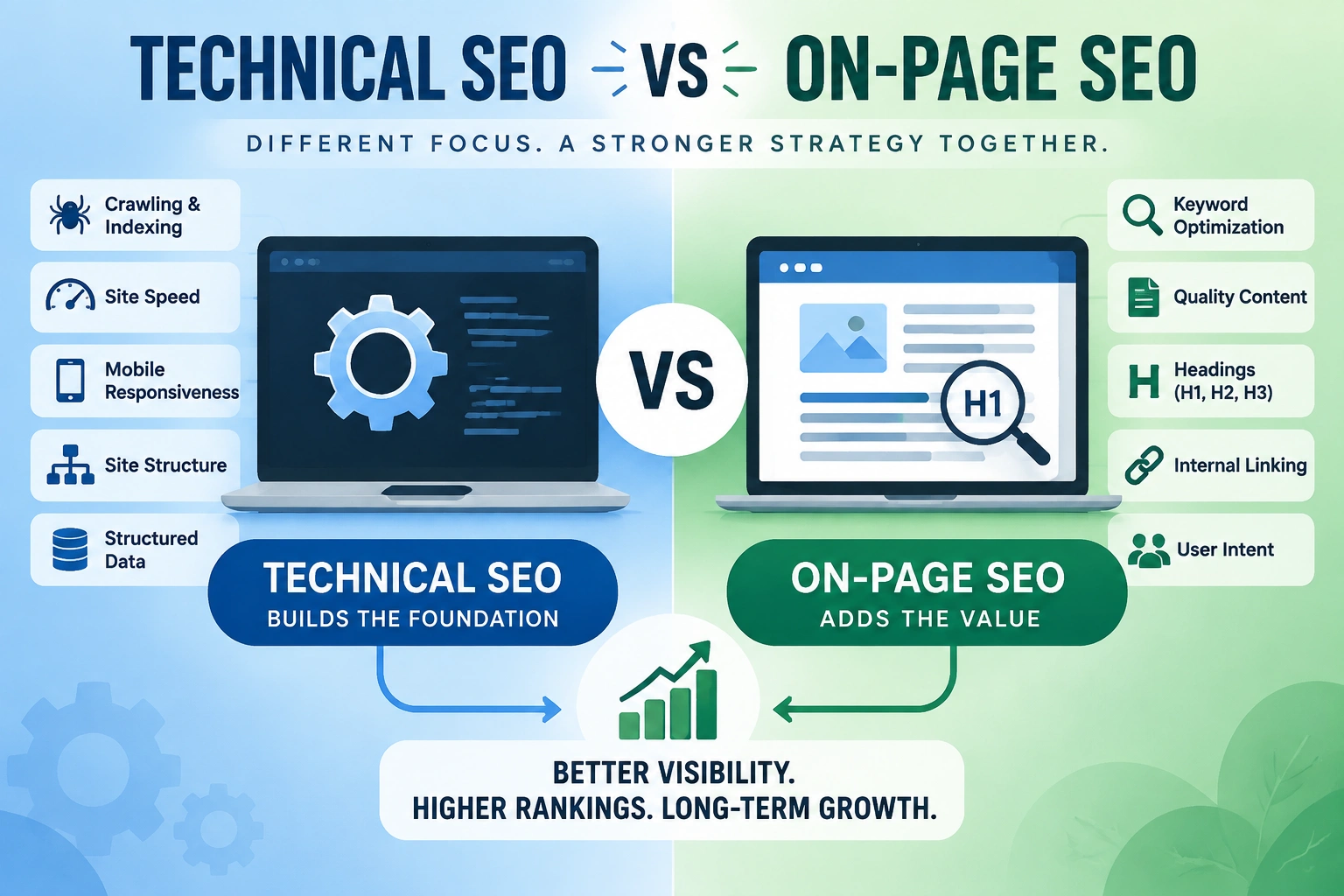
- Introduction
- Technical SEO vs. On-Page SEO: The Key Differences
- How Technical SEO and On-Page SEO Work Together
- Technical SEO vs On-Page SEO: Which Should You Prioritize First?
- Common Mistakes Businesses Make With Technical and On-Page SEO
- Use Technical SEO and On-Page SEO Together for Long-Term Growth
Businesses often struggle to understand why their website is not generating consistent organic traffic despite investing in SEO. Common challenges include:
- Website not ranking despite quality content: Businesses create valuable content but fail to see results because technical issues prevent proper crawling and indexing.
- Confusion between technical SEO and on-page SEO: Many teams do not know which SEO area requires attention first.
- Limited technical resources: Companies may lack developers or SEO expertise to fix website performance and structural issues.
- Poor search visibility: Pages may exist but fail to appear for relevant searches due to weak optimization or technical barriers.
- Low organic conversions: Traffic may increase, but poorly optimized pages fail to match user intent and drive business outcomes.
- Wasted SEO investment: Businesses spend time creating content without addressing foundational website problems.
Introduction
Technical SEO and on-page SEO are not optional—they are the foundation of serious organic growth. Technical SEO ensures search engines can crawl, understand, and index your website properly, while on-page SEO makes your pages relevant, valuable, and aligned with what users are searching for. Ignore technical issues, and even great content can remain invisible. Ignore on-page optimization, and your website may fail to compete. Businesses that want consistent rankings, qualified traffic, and long-term search visibility need both working together as part of a complete SEO strategy.Lorem ipsum dolor sit amet, consectetur adipiscing elit. Ut elit tellus, luctus nec ullamcorper mattis, pulvinar dapibus leo.
Technical SEO vs. On-Page SEO: The Key Differences
| Comparison Factor | Technical SEO | On-Page SEO |
| Main Purpose | Improves website accessibility, crawlability, and technical performance for search engines. | Improves page relevance, content quality, and user understanding. |
| Primary Focus | Website structure, backend performance, and technical health. | Content optimization and page-level improvements. |
| Main Goal | Helps search engines crawl, index, and understand a website efficiently. | Helps pages rank for relevant searches by satisfying user intent. |
| Optimization Level | Focuses on the entire website. | Focuses on individual web pages. |
| Key Activities | Site speed optimization, mobile usability, XML sitemap, robots.txt, HTTPS, schema markup, and fixing crawl errors. | Keyword optimization, title tags, meta descriptions, headings, content structure, internal links, and image optimization. |
| Primary Users Impacted | Search engine crawlers and website visitors through better performance. | Users and search engines through better content experience. |
| Teams Involved | SEO specialists, developers, engineers, and technical teams. | SEO specialists, content writers, editors, and marketing teams. |
| Common Issues Fixed | Slow loading pages, indexing problems, duplicate content, broken links, and technical errors. | Poor content relevance, weak keyword targeting, low engagement, and unclear page structure. |
| Tools Used | Google Search Console, PageSpeed Insights, Screaming Frog, Lighthouse, and Sitebulb. | Google Search Console, Ahrefs, Semrush, Google Keyword Planner, and content tools. |
| Success Metrics | Crawlability, index coverage, Core Web Vitals, page speed, and technical health. | Rankings, organic traffic, CTR, engagement, and content conversions. |
| Best Time to Prioritize | During website launches, migrations, redesigns, or when technical issues impact rankings. | During content creation, optimization, and efforts to improve search visibility. |
| Simple Difference | Technical SEO makes your website easy for search engines to access. | On-page SEO makes your content easy for users and search engines to understand. |
How Technical SEO and On-Page SEO Work Together
Technical SEO and On-Page SEO are not separate approaches; they are two essential components of a complete SEO strategy. Technical SEO focuses on building the infrastructure of a website, ensuring that search engines can crawl, access, and index pages effectively. On the other hand, On-Page SEO focuses on optimizing the content and page elements so search engines can understand the topic, relevance, and value of each page.
A website with strong technical optimization but weak or unhelpful content may fail to satisfy user intent and achieve higher rankings. Likewise, high-quality content may not perform well if technical problems prevent search engines from properly discovering or understanding the page. Issues such as slow page speed, poor website structure, indexing errors, and crawling limitations can reduce the visibility of even the best content.
You can think of Technical SEO as the foundation of a website, while On-Page SEO adds the value and information built on that foundation. When both elements work together, search engines can discover your pages easily, understand your content accurately, and deliver it to users searching for relevant information.
For example, a blog page targeting the keyword “technical SEO vs on-page SEO” requires strong Technical SEO practices, including:
- Fast website loading speed
- Mobile-friendly design
- Proper indexing settings
- Clear website architecture
- Structured data implementation
At the same time, the page must include effective On-Page SEO optimization, such as:
- Relevant and well-structured headings
- Proper keyword usage
- Helpful and informative content
- Internal linking strategies
- Clear answers to user search queries
A successful SEO strategy combines both areas to create a website that is easy for search engines to understand and valuable for users.
- Technical SEO helps search engines discover, crawl, and access your website.
- On-Page SEO helps search engines understand your content and its relevance.
- Together, they improve rankings, user experience, and sustainable organic growth.
Technical SEO vs On-Page SEO: Which Should You Prioritize First?
There is no universal winner between technical SEO and on-page SEO—the right priority depends on your website’s current condition, goals, and SEO problems. In most cases, businesses should fix critical technical issues first because search engines cannot rank pages they cannot properly crawl, index, or access.
For New Websites
Prioritize technical SEO first. Before publishing large amounts of content, ensure your website has a clean structure, mobile-friendly design, fast loading speed, proper indexing settings, HTTPS security, and an optimized URL structure. A strong technical foundation allows future content to perform better.
For Existing Websites With Technical Issues
Focus on technical SEO improvements before creating more content. Problems like indexing errors, slow pages, broken links, or poor site architecture can prevent search engines from understanding and ranking your pages.
For Websites With Good Technical Health
Shift focus to on-page SEO. Optimize existing pages with better keyword targeting, improved content structure, stronger internal linking, clearer headings, and content that directly answers user intent.
For Maximum Organic Growth
The best approach is not choosing one over the other—it is combining both. Technical SEO creates the foundation, while on-page SEO builds relevance and authority. A website needs both to achieve consistent rankings, qualified traffic, and long-term SEO success.
Common Mistakes Businesses Make With Technical and On-Page SEO
- Ignoring technical issues: Publishing content without fixing crawl errors, slow pages, broken links, or indexing problems limits ranking potential.
- Creating content without search intent: Writing keyword-focused content that does not solve user problems leads to poor engagement.
- Overlooking mobile optimization: Poor mobile experience can negatively impact usability and visibility.
- Keyword stuffing: Excessive keyword usage makes content unnatural and reduces quality.
- Neglecting internal linking: Missing relevant links prevents users and search engines from discovering important pages.
- Optimizing once and forgetting: SEO requires regular audits, updates, and continuous improvements.
- Focusing on only one SEO area: Strong rankings require both technical foundations and high-quality content optimization.
Use Technical SEO and On-Page SEO Together for Long-Term Growth
Technical SEO and on-page SEO are not separate strategies—they are two essential parts of a successful SEO foundation. Technical SEO Checklist ensures search engines can access and understand your website, while on-page SEO improves content relevance and user experience. Businesses that combine both approaches can improve visibility, attract qualified traffic, and build sustainable organic growth. Instead of choosing one, focus on creating a technically strong website with valuable, intent-driven content. Need expert guidance? Contact RankDigit for the right SEO strategy to improve your website’s visibility and organic growth.


Leave a Comment
Your email address will not be published. Required fields are marked *