Difference Between SEO and SMO: Key Differences (2026)
- Introduction
- What Is the Difference Between SEO and SMO?
- What Is SEO (Search Engine Optimization)?
- What Is SMO (Social Media Optimization)?
- What Are the Key Differences Between SEO and SMO?
- What Are the Benefits of SEO and SMO?
- How Do SEO and SMO Work Together?
- Which Is Better for Small Businesses in India: SEO or SMO?
- How Do You Measure SEO and SMO Performance?
- Common SEO and SMO Mistakes to Avoid
Introduction
In today's competitive digital landscape, businesses need strong online visibility to reach potential customers and build brand awareness. Search engines help users discover products and services, while social media platforms enable businesses to connect with audiences, share content, and encourage engagement.
Understanding the difference between SEO and SMO helps businesses choose the right digital marketing strategies for their goals. Search Engine Optimization (SEO) focuses on improving visibility in organic search results, whereas Social Media Optimization (SMO) strengthens a brand's presence across social platforms. Combining both approaches can support website discovery, audience engagement, and long-term business growth.
What Is the Difference Between SEO and SMO?
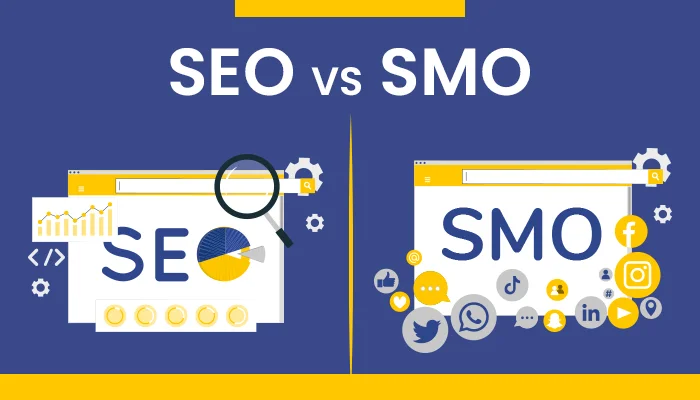
The main difference between SEO (Search Engine Optimization) and SMO (Social Media Optimization) is the platform each strategy targets. SEO improves a website’s visibility in organic search results, while SMO improves a brand’s visibility and engagement on social media platforms. Both help businesses reach relevant audiences, but they use different methods to attract attention and encourage interaction.
| Basis | SEO | SMO |
|---|---|---|
| Full form | Search Engine Optimization | Social Media Optimization |
| Primary focus | Organic search visibility | Social media presence and engagement |
| Main platforms | Google and Bing | Instagram, Facebook, LinkedIn, and YouTube |
| Key activities | Keyword research, content optimization, technical SEO, and link building | Profile optimization, content sharing, captions, hashtags, and audience engagement |
| Main goal | Attract relevant organic website traffic | Increase social visibility, engagement, and referral traffic |
In simple terms, SEO helps people discover your website through search engines, whereas SMO helps them discover and interact with your brand through social media.
What Is SEO (Search Engine Optimization)?
Search Engine Optimization (SEO) is the process of improving a website to increase its visibility in unpaid search engine results. It helps businesses attract relevant visitors by making their pages more useful, accessible, and relevant to users' search queries.
For example, a digital marketing company can optimize its service pages for keywords such as “SEO services for small businesses” to reach potential customers searching for those services.
Key SEO activities include:
-
Keyword research: Identifying relevant search terms used by the target audience.
-
On-page SEO: Optimizing titles, headings, content, images, and internal links.
-
Technical SEO: Improving website speed, crawlability, indexability, and mobile usability.
-
Content optimization: Publishing helpful, relevant, and well-structured content.
-
Backlink building: Earning links from relevant, trustworthy websites.
Together, these activities help search engines understand website content and can improve organic visibility over time.
What Is SMO (Social Media Optimization)?
Social Media Optimization (SMO) is the process of improving a brand’s social media profiles and content to increase discoverability, audience engagement, and brand awareness. It helps businesses make their social presence more effective and encourages users to interact with their content.
For example, a digital marketing company can optimize its LinkedIn profile, share SEO tips on Instagram, and publish useful business content on Facebook to connect with potential customers.
Key SMO activities include:
-
Profile optimization: Using clear descriptions, relevant keywords, consistent branding, and updated contact details.
-
Content sharing: Publishing useful posts, images, videos, and infographics.
-
Platform-specific optimization: Adapting content for Instagram, Facebook, and LinkedIn audiences.
-
Audience engagement: Responding to comments, messages, and relevant discussions.
-
Performance monitoring: Tracking reach, shares, clicks, and engagement.
These practices can strengthen social visibility, build audience relationships, and direct interested users to a website.
What Are the Key Differences Between SEO and SMO?
SEO vs SMO mainly differs in how businesses reach audiences, attract attention, and measure digital marketing performance. SEO targets users searching for information, products, or services, while SMO focuses on building visibility and engagement through social media platforms.
| Comparison Factor | SEO | SMO |
|---|---|---|
| Primary goal | Improve search visibility and attract organic traffic | Increase social visibility, engagement, and brand awareness |
| Platforms | Google, Bing, and other search engines | Instagram, Facebook, LinkedIn, and YouTube |
| Key activities | Keyword research, content optimization, technical SEO, and backlink building | Profile optimization, content sharing, hashtags, and audience interaction |
| Audience behaviour | Users actively searching for answers or solutions | Users discovering, browsing, sharing, and engaging with content |
| Content formats | Blog posts, landing pages, service pages, and guides | Social posts, reels, videos, stories, and infographics |
| Main metrics | Organic traffic, rankings, clicks, conversions, and impressions | Reach, engagement rate, shares, profile visits, referral clicks, and conversions |
| Typical outcomes | Sustainable search visibility and relevant website traffic over time | Greater brand awareness, community engagement, and potential referral traffic |
In summary, SEO helps businesses get discovered through search engines, whereas SMO helps them connect with audiences on social platforms. Both can support conversions when aligned with business goals and audience needs.
What Are the Benefits of SEO and SMO?
SEO and SMO offer different advantages that help businesses improve their online presence, reach potential customers, and support lead generation. SEO focuses on attracting users through search engines, while SMO helps brands build relationships and engagement on social platforms.
Benefits of SEO:
-
Organic traffic: Helps attract relevant visitors from unpaid search results.
-
Long-term visibility: Well-optimized content can continue attracting search traffic over time.
-
Credibility: Strong search visibility can help build user trust.
-
Lead generation: Connects businesses with people actively searching for their products or services.
Benefits of SMO:
-
Brand awareness: Introduces businesses to wider social media audiences.
-
Audience engagement: Encourages comments, shares, discussions, and direct interactions.
-
Content distribution: Helps businesses share blogs, offers, videos, and updates.
-
Referral traffic: Can direct interested social media users to business websites.
Overall, SEO supports search-driven discovery, while SMO strengthens social engagement. Using both strategically can create more opportunities to attract and connect with potential customers.
How Do SEO and SMO Work Together?
SEO and SMO work together as part of an integrated digital marketing strategy. SEO helps businesses attract users through organic search, while SMO distributes content across social platforms to increase visibility, encourage engagement, and bring additional visitors to the website.
Here is how businesses can combine both strategies:
-
Research audience interests: Identify relevant keywords, customer questions, and trending topics to guide content planning.
-
Create SEO-friendly content: Publish useful blog posts, service pages, and guides optimized for relevant search queries.
-
Share content on social media: Distribute website content through Instagram, Facebook, and LinkedIn using platform-appropriate formats.
-
Encourage audience engagement: Respond to comments, answer questions, and participate in relevant discussions.
-
Measure performance: Track organic traffic, social engagement, referral visits, and conversions to identify improvement opportunities.
Example: A digital marketing agency publishes a blog about local SEO, optimizes it for search engines, and shares key insights on LinkedIn and Instagram. SEO supports search discovery, while SMO helps distribute the content and engage potential customers.
Which Is Better for Small Businesses in India: SEO or SMO?
Choosing between SEO and SMO depends on a small business's marketing goals, target audience, budget, and expected timeline. SEO is useful for attracting customers actively searching for products or services, while SMO helps businesses build brand awareness and connect with audiences on social platforms.
| Business Goal | Recommended Strategy | Practical Example |
|---|---|---|
| Attract local customers | Local SEO | Optimize Google Business Profile and location-specific website pages |
| Increase brand awareness | SMO | Share product updates and promotional content on Instagram and Facebook |
| Generate search-driven leads | SEO | Optimize service pages for relevant local keywords |
| Build customer relationships | SMO | Respond to comments, messages, and customer queries |
| Grow online visibility | SEO + SMO | Publish SEO-friendly blogs and distribute them through social channels |
Practical recommendation: A local service provider, such as a plumber or digital marketing agency, can prioritize local SEO to reach nearby searchers. A fashion retailer may use Instagram and Facebook to showcase products and engage customers.
For many small businesses in India, combining SEO and SMO provides a balanced approach to search visibility, social engagement, and potential lead generation.
How Do You Measure SEO and SMO Performance?
Measuring SEO and SMO performance helps businesses understand which activities attract audiences, generate engagement, and contribute to business goals. Use tools such as Google Search Console and Google Analytics to monitor website performance, alongside social media platform insights.
| Channel | Key Metrics | Measurement Tool |
|---|---|---|
| SEO | Organic clicks, impressions, search rankings, and click-through rate (CTR) | Google Search Console |
| SEO | Organic sessions, engaged sessions, leads, and conversions | Google Analytics 4 |
| SMO | Reach, impressions, likes, comments, shares, and engagement rate | Instagram Insights, Facebook Insights, and LinkedIn Analytics |
| SMO | Link clicks, referral traffic, and conversions | Social platform analytics and Google Analytics 4 |
Focus on business objectives: Track organic traffic and qualified leads to evaluate SEO, while monitoring reach, engagement, and referral visits to assess SMO. Compare results over time to identify successful activities and areas that need improvement.
Common SEO and SMO Mistakes to Avoid
Poor optimization and inconsistent social media activities can limit the effectiveness of SEO and SMO. Avoid these common mistakes to maintain a reliable digital marketing strategy.
-
Keyword stuffing: Use relevant keywords naturally instead of repeating them unnecessarily.
-
Low-quality backlinks: Focus on earning relevant, trustworthy links rather than buying spammy links.
-
Ignoring technical SEO: Regularly check website speed, mobile usability, crawlability, and indexing.
-
Inconsistent posting: Follow a realistic social media content calendar.
-
Irrelevant hashtags: Use specific hashtags related to your content and audience.
-
Misleading engagement: Prioritize genuine interactions instead of buying likes, followers, or comments.
Review performance regularly and update your strategies based on audience behaviour and business goals.